
Names in Stone
Napoleon didn't visit Lincoln. His legal legacy did.
First-time visitors do a double take: **Napoleon** is carved into Nebraska's Capitol.
Before you imagine a secret French occupation of the Haymarket — breathe. The names on this building are a **timeline of law**, not a guest list of tourists who passed through Lincoln.
The who's-who on the walls
**Hammurabi. Justinian. Blackstone. Napoleon.** And more. Each represents a milestone in how humans wrote rules that outlive rulers — codes, commentaries, revolutions in ink that became revolutions in stone.
Napoleon's here for the **Napoleonic Code** — civil law structure that influenced systems worldwide. Not because he loved corn. Because Nebraska's legal framework participates in a conversation centuries old.
Lancaster's hidden American moment
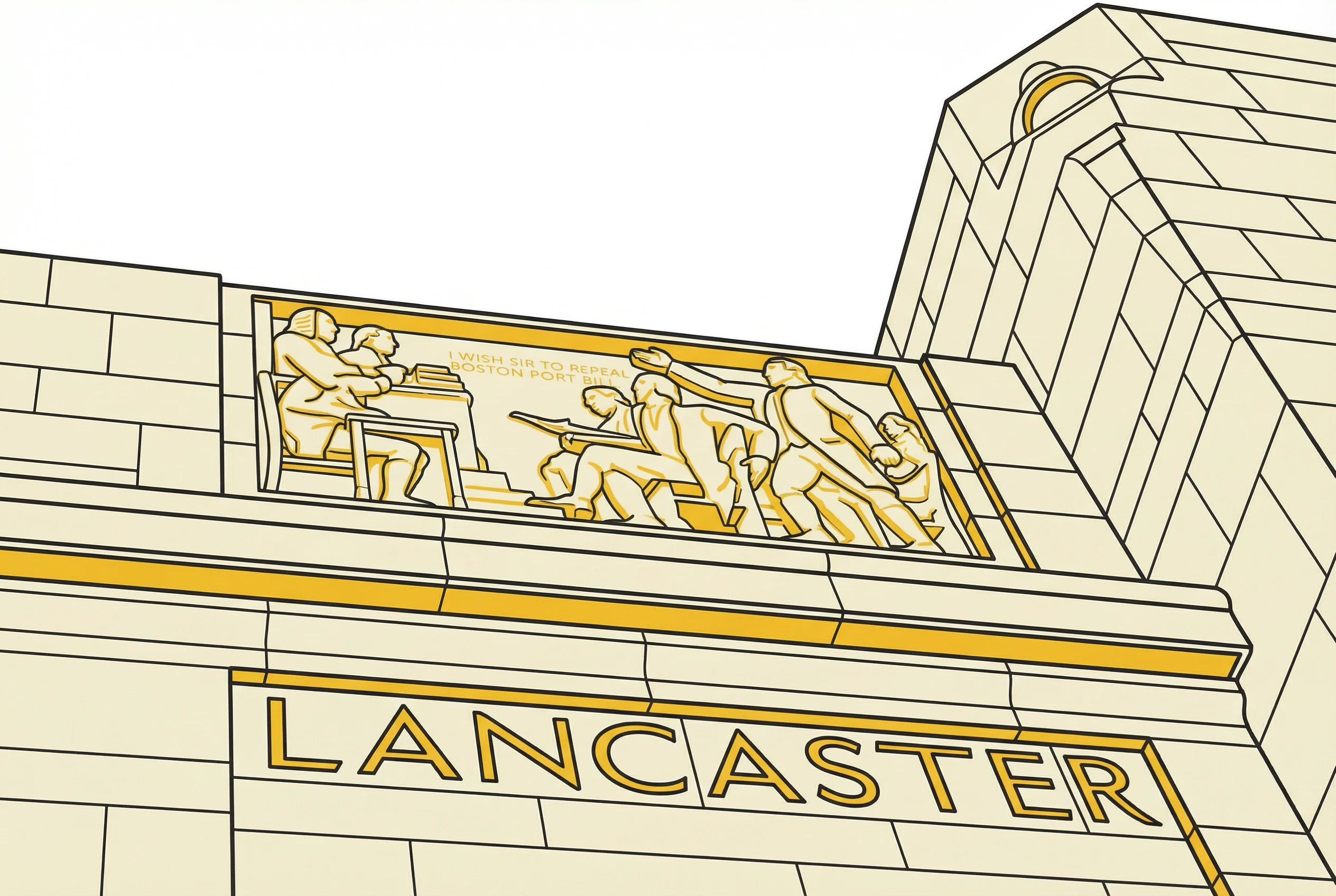
Above the word **LANCASTER** on the facade: a Continental Congress scene and the line *"I wish sir to repeal Boston Port Bill."* America's founding arguments, carved into a Great Plains capitol. Subtle. Intentional. Easy to walk past.
That's the Capitol's personality: **high school history class, if your teacher had a stonemason budget.**
What we know for sure
- Exterior inscriptions were planned as part of Goodhue's **symbolism program** with Hartley Burr Alexander.
- NHS archives document specific inscription subjects, including Napoleon (1926 record).
- The building connects Nebraska governance to **broader civilization narratives** — not random name-dropping.
Your move
Pick one name you recognize. Google why it's on a courthouse wall in the Midwest. You'll fall down a rabbit hole that ends with "huh, that's actually thoughtful."
That's the assignment. The Capitol is a **library you walk through.**
People & places in this story
Sources
Get the Lincoln Insider
Hidden gems, new art drops, and local lore — straight to your inbox.